
 My Lists
 Classes
 Learning Center
Women in Woodworking® Series: How to Rout Perfectly Sized Dadoes
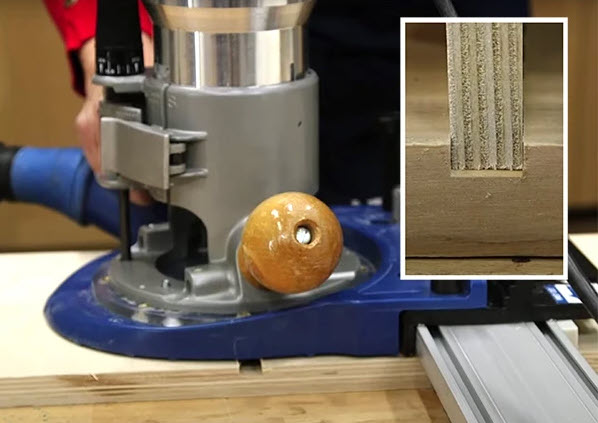
In this Women in Woodworking® demo video, JoJo Liebeler will show you how to cut perfectly fitting dadoes in a small bookshelf project using a Rockler Perfect Fit Dado Jig. It lets you rout straight, precise dadoes and grooves at any increment from 1/4" to 1" wide. Since it uses a scrap of your actual material for setup, the fit is spot-on, every time. Just rout the first shoulder with the jig in the "closed" position, then rout the second shoulder with the jig in the "open" position. The result is a tailor-cut dado that fits like no other.
Once the jig is set, the stops make it easy to return to the "open" position so you can machine as many dadoes as you like for that thickness. No need to buy undersized plywood router bits, or bits for other odd thicknesses—your dados can fit any thickness within the range (19/64" for example) using standard 1/4", 3/8" or 1/2" straight router bits. Not only do you get easy operation and a perfect fit, but you also get an integral dust port that lets you extract the mess before it ever hits the floor.
WATCH: How to Cut Dadoes that Fit Perfectly
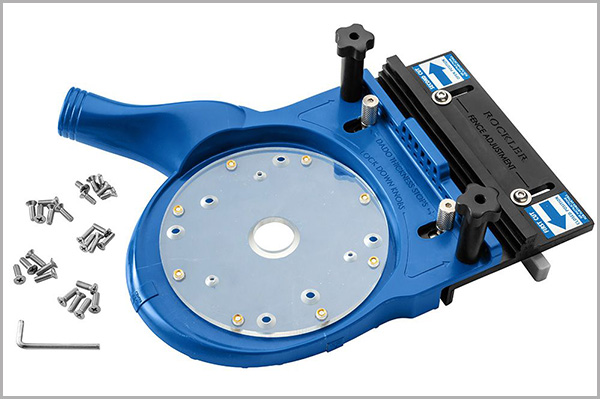
The Rockler Perfect Fit Dado Jig includes the jig base, router base and all the necessary hardware you need to use the jig. Straight router bits are not included.
Dadoes, Grooves and Rabbets: What's the Difference?
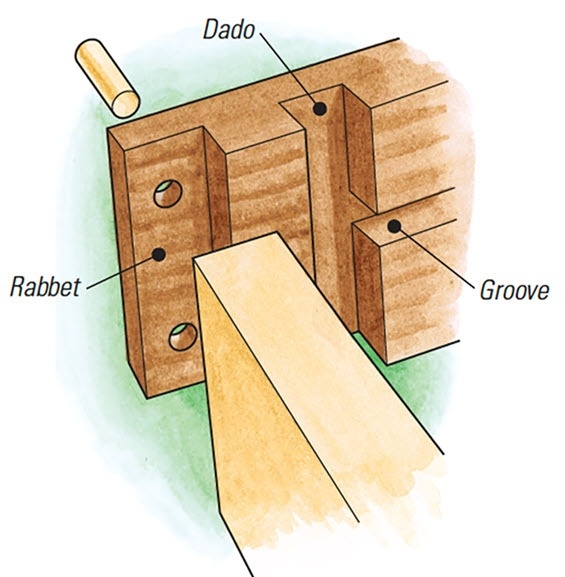
Dadoes: Three-sided channel cuts that are oriented across the grain of solid-wood parts or the width of sheet goods. They're perfect for joining parts end-to-side—for example, when attaching shelves to the sides of a bookcase, additional walls inside a cabinet or dividers inside a drawer or chest.
Grooves: Unlike dadoes, grooves are three-sided channel cuts that follow the length of a workpiece (with the grain direction) instead of across the board's width. Grooves provide many joinery options, such as housing panels in a door frame or capturing a drawer bottom in the drawer sides.
Rabbets: Cuts that are made along the ends or edges of boards and panels partway through their thickness to create a short offset tongue. Typically, a rabbet tongue overlaps the end of a mating workpiece to hide its end grain.
-
 Bosch 2-1/4 HP Electronic Fixed-Base RouterSpecial Price $189.00 Each Regular Price $229.00 Save $40.00
 -
-
Bora 50'' NGX Clamping Straight Edge GuideSpecial Price $31.99 Each Regular Price $54.99 Save 42%Out of stock


Keep the inspiration coming!
Subscribe to our newsletter for more woodworking tips and tricks


